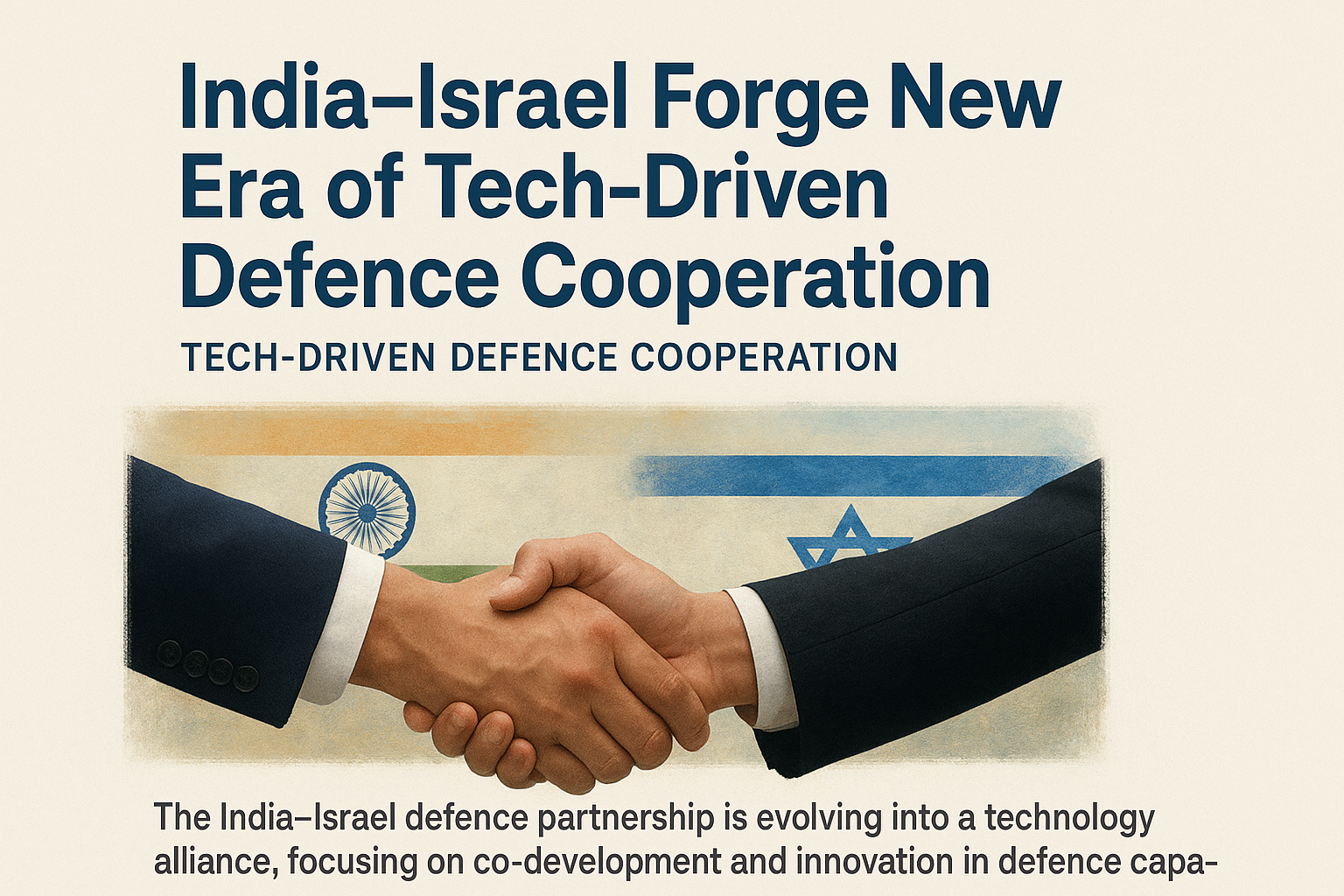
Tel Aviv, November 2025 -India and Israel have taken a decisive step to strengthen their strategic and technological partnership through a new Memorandum of Understanding (MoU) on Defence Cooperation, signed during the 17th India–Israel Joint Working Group (JWG) meeting held in Tel Aviv.
The agreement, co-chaired by India’s Defence Secretary Rajesh Kumar Singh and Israel’s Director General of the Ministry of Defence Maj Gen (Res) Amir Baram, reflects a shared commitment to technology-led collaboration, focusing on co-development, co-production, and innovation-driven defence capabilities.
Technology at the Core of Strategic Synergy
The new MoU signifies a forward shift from traditional military exchanges to a partnership rooted in cutting-edge technology integration. Key areas outlined for cooperation include Artificial Intelligence (AI), Cybersecurity, R&D, Science & Technology, and Advanced Defence Manufacturing.
For India, this partnership complements the Atmanirbhar Bharat vision by accelerating indigenous defence production and fostering collaboration with a nation globally recognised for defence innovation. For Israel, it opens access to India’s vast market, skilled technical workforce, and growing ecosystem of defence start-ups.
Strategic Depth and Shared Security Vision
The JWG also reviewed ongoing collaborations, highlighting how both nations have benefited from each other’s unique strengths. Discussions spanned counter-terrorism, regional security, and emerging technological threats, underscoring their shared approach to leveraging technology for strategic stability.
Over the years, India and Israel have evolved from a buyer-seller relationship into trusted technology partners. Their cooperation now spans UAV systems, precision weapons, border surveillance, and electronic warfare -all built on mutual trust and operational compatibility.
Policy Implications
1. Innovation as Security Multiplier: The MoU positions technology as a strategic asset, reinforcing how innovation ecosystems can shape next-generation defence readiness.
2. From Transfer to Co-creation: The emphasis on co-development and co-production aligns with global best practices for sustainable and resilient supply chains.
3. Defence Industrial Diplomacy: The partnership reflects a broader trend of using industrial collaboration as a tool for strategic diplomacy -merging India’s scale with Israel’s agility.
4. Future of Dual-Use Technologies: Areas like AI, autonomous systems, and cyber defence offer significant spillover potential for civilian industries, contributing to India’s digital economy.
Conclusion
The India–Israel defence partnership is no longer confined to tactical cooperation; it is evolving into a technology alliance built on shared innovation, strategic trust, and a vision for a secure, self-reliant future. As both nations navigate a rapidly transforming global defence landscape, this collaboration stands as a model for how tech diplomacy can redefine security partnerships in the 21st century.



Leave a Reply